One Watch to Rule Them All? Why the Smartwatch's Jack-of-All-Trades Era Is Quietly Ending
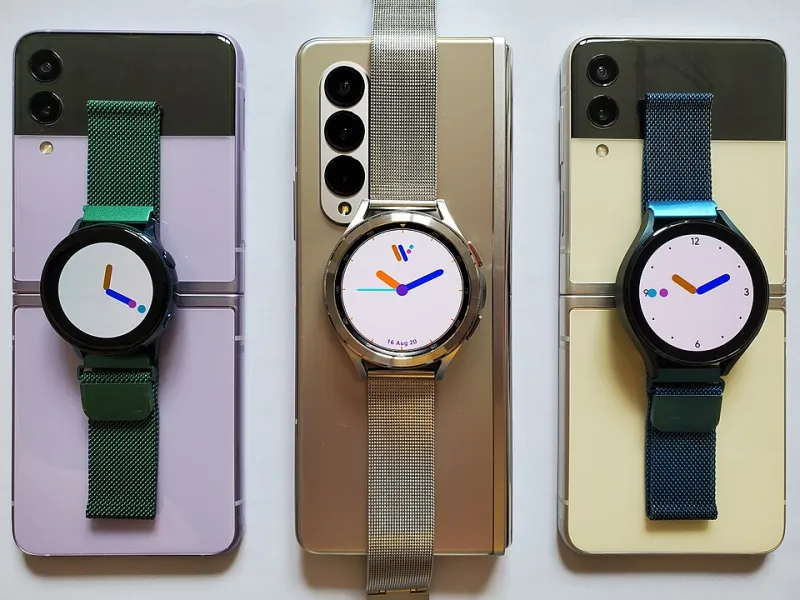
Photo: Ka Kit Pang, CC BY 3.0, via Wikimedia Commons
When Apple launched the original Watch in 2015, the pitch was seductive: one device on your wrist to handle notifications, fitness, payments, navigation, and eventually your health. A decade in, the Apple Watch is genuinely impressive hardware. It's also, if you're honest about it, a device that does fifteen things at a C+ level rather than three things at an A. And a growing number of people — especially the kind of obsessive early adopters who actually think about this stuff — are starting to notice.
The smartwatch isn't dying. But the monolithic, do-everything wrist computer might be approaching its cultural and commercial peak. What's quietly replacing it — or at least supplementing it — is a sprawling ecosystem of single-purpose wearables that are extraordinarily good at the one job they were built to do.
The All-in-One Problem Nobody Talks About
Here's the core tension in every smartwatch: the more features you pack in, the more compromises you make on each one.
Take sleep tracking. The Apple Watch is a mediocre sleep tracker, and Apple essentially acknowledges this by recommending you charge it while you sleep. Garmin's sleep data is more granular, but Garmin's watches are chunky and uncomfortable enough that plenty of users ditch them at bedtime too. Meanwhile, the Oura Ring — a device that does almost nothing except track your health metrics — has become the sleep tracker of choice for athletes, biohackers, and Silicon Valley executives precisely because it's comfortable enough to forget you're wearing it.
Or consider running. Garmin and Polar have spent decades building running-specific hardware with features — running power, ground contact time, vertical oscillation — that Apple has either ignored or implemented superficially. Serious runners don't wear Apple Watches during training. They wear Garmins, or Polars, or increasingly COROS watches that offer the specific metrics their sport demands without the bloat of a general-purpose computer on their wrist.
The pattern repeats across categories. For payment, you don't need a full smartwatch — you need an NFC chip and a secure element, which is what devices like the McLear NFC ring deliver. For stress tracking, Garmin's Body Battery feature is solid, but dedicated HRV monitors like those from Whoop or even standalone devices from companies like Muse offer more actionable data with less noise around them.
The Startups Eating the Smartwatch's Lunch
Whoop is probably the clearest example of the specialized wearable thesis playing out at scale. The company makes a screenless, subscription-based fitness tracker that does exactly three things: measures your strain, your recovery, and your sleep. No notifications. No apps. No watch face. Just data about your body, delivered through a thoughtfully designed app.
Whoop's user base skews heavily toward serious athletes and health-obsessed professionals — exactly the demographic that was supposed to be Apple Watch's core market. The company has raised over $400 million and reportedly has hundreds of thousands of paying subscribers. That's not a niche curiosity; that's a real business built on the premise that people will pay a premium for a wearable that's relentlessly focused.
Oura has taken a similar approach in a different form factor. The ring format eliminates the social signaling of a visible fitness tracker and prioritizes comfort for 24/7 wear. Oura's third-generation ring now tracks readiness scores, period prediction, and SpO2 levels, and the company has partnered with everyone from the NBA to the UFC to validate its health metrics with professional athletes. Its latest partnership with Google, which integrated Fitbit data with Oura's platform, suggests the big players are paying attention.
On the running side, COROS has quietly built a devoted following by making GPS watches specifically for endurance athletes at prices that undercut Garmin's premium lineup. The company's focus on battery life — some COROS watches last 30+ hours in GPS mode — and its clean, sport-specific software have won it a loyal community among ultra runners and triathletes who find Garmin's interface cluttered and Apple's battery life laughable for long events.
Even in the stress and mental wellness space, specialized players are emerging. Muse makes EEG headbands for meditation feedback. Apollo Neuro makes a wearable that delivers haptic vibrations designed to reduce stress response. Neither of these would make sense as features on a general-purpose smartwatch — they require dedicated hardware and focused software experiences to work.
What the Data Is Starting to Show
Market research firm IDC has noted that while smartwatch shipments continue to grow overall, the growth rate is slowing in the premium segment — exactly where Apple, Samsung, and Google compete. Meanwhile, the fitness band and health tracker category, which had been declining as smartwatches absorbed that market, is showing signs of stabilization as purpose-built devices carve out defensible niches.
Consumer surveys from companies like Parks Associates show that the top reasons people stop using their smartwatch are battery life, comfort during sleep, and the feeling that they're not using most of the features. Those are precisely the problems that single-purpose devices solve by design.
There's also a fatigue factor at play. The smartwatch, like the smartphone before it, has become a notification delivery device that many users find more stressful than helpful. A screenless Whoop or a silent Oura ring doesn't buzz at you with Slack messages. For a growing segment of users, that's not a bug — it's the whole point.
Will Modular Wearables Actually Break Through?
The honest answer is: partially, and probably not in the way the most enthusiastic proponents predict.
The reality is that most people don't want to wear three devices on their body. The idea of a sleep ring, a running watch, and a payment wearable alongside your phone is a lot of hardware to manage. For the dedicated fitness crowd or the quantified-self obsessives, that tradeoff makes sense. For the mainstream consumer who bought an Apple Watch because it was the obvious default, probably not.
What's more likely is a segmentation of the market along behavioral lines. Casual users will stick with all-in-one smartwatches because convenience beats optimization for them. Power users in specific domains — athletes, health-focused professionals, biohackers — will migrate toward specialized devices that serve their specific needs better than any Swiss-army-knife wearable can.
The smartwatch makers aren't blind to this. Apple's health research initiatives, Garmin's deepening sport-specific features, and Samsung's partnership with health platforms all reflect an understanding that the competition is no longer just each other — it's also the increasingly capable single-purpose devices eating at the edges of their market.
The Wrist Is Just Getting Started
What's exciting about this moment isn't that smartwatches are failing. It's that the wrist — and the body more broadly — is becoming a genuinely contested platform in a way it wasn't five years ago. The hardware is good enough, the sensor technology is mature enough, and the consumer appetite for health data is strong enough that we're finally seeing real differentiation.
The companies that figure out how to do one thing on your wrist so well that you'd never consider switching to a generalist device — those are the ones worth watching. Not because they'll kill the Apple Watch, but because they'll force it to get better. And in the meantime, your wrist might be the most interesting real estate in consumer tech.