Glasses That Disappear: Why AR Eyewear Is the Last Gadget You'll Ever Need
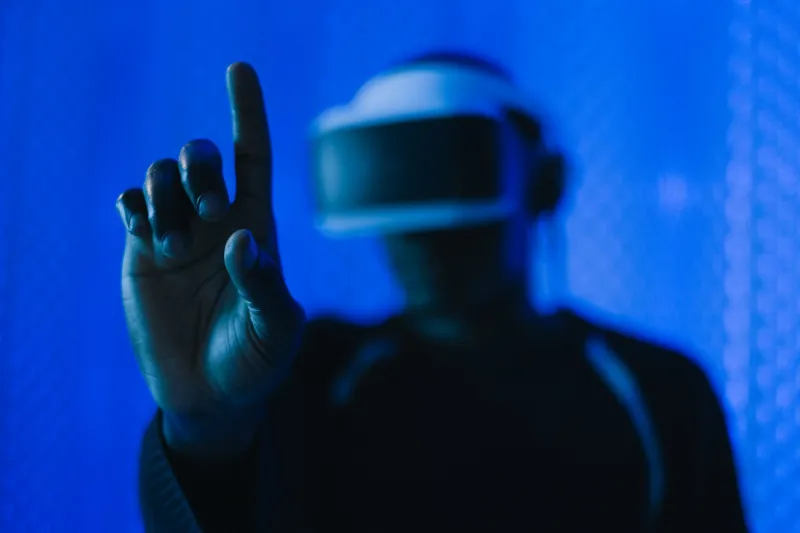
There's a specific moment that AR researchers talk about in hushed, almost reverent tones. They call it the "forget moment" — the instant a user stops being aware they're wearing a device and just... lives inside the experience. It hasn't happened at scale yet. But the companies chasing it are closer than most people realize, and when they get there, the smartphone as we know it is done.
The race isn't really about who ships the flashiest heads-up display. It's about who can make the hardware vanish.
The Weight of the World (On Your Nose)
Every AR headset that's bombed in the consumer market — and there have been plenty — failed for the same core reason: it asked too much of the person wearing it. Google Glass made you look like a cyborg extra from a mid-2000s sci-fi flick. Meta's early Quest hardware was a brick strapped to your skull. Apple's Vision Pro is genuinely impressive engineering wrapped in a form factor that screams "I paid $3,500 to look weird at the airport."
The problem isn't software. It's physics. Cramming waveguide optics, a processor, a battery, speakers, cameras, and sensors into something that sits on your face without making you look unhinged is an almost comically hard engineering challenge. But the materials science has been quietly catching up.
New waveguide lens technology — the stuff that bends light from a tiny projector into your field of view — is getting dramatically thinner. Startups like Lumus and Dispelix are producing optics that slot into lenses barely thicker than your average prescription pair. Meanwhile, micro-LED projection engines are shrinking fast, with companies like Mojo Vision and eMagin pushing pixel density high enough to render crisp text without the headache-inducing shimmer of older diffractive displays.
The result? Frames that look increasingly like something you'd actually choose to wear.
Power Is the Dirty Secret Nobody Wants to Talk About
Here's the part the press releases always gloss over: even if you solve the optics, you still need to power the thing. And batteries don't shrink as fast as chips do.
A pair of glasses that runs full AR overlays, ambient AI processing, and real-time connectivity for more than three or four hours is still largely a fantasy. The current workaround — offloading heavy compute to a companion device in your pocket — feels like a kludge because it is one. You're essentially building a second phone just to run your glasses.
But a few approaches are genuinely promising. Qualcomm's Snapdragon AR platforms are getting more power-efficient with each generation, and the company has been vocal about targeting the "all-day wearable" threshold as a primary design goal. Neural processing units (NPUs) baked directly into AR silicon can handle context-aware tasks — recognizing faces, translating signs, pulling up calendar info — at a fraction of the power draw of traditional processing approaches.
Some startups are getting creative with energy harvesting, using body heat and motion to trickle-charge micro-cells throughout the day. It sounds fringe, but in a device that's always on your body, passive energy recovery starts to add up in meaningful ways.
The UI Problem Is Actually the Interesting Part
Here's where things get philosophically weird. Even if someone ships perfect AR glasses tomorrow — light, beautiful, all-day battery — there's still a fundamental question nobody has fully answered: how do you interact with a computer that has no screen you can point at?
Touch doesn't work when the display is projected into thin air. Voice is great until you're on a crowded subway platform. Hand gesture control is cool in demos and exhausting in real life — nobody wants to wave at their face all day to check a Slack notification.
The most compelling answer emerging from the research community is what some are calling "intent-aware computing" — systems that use eye tracking, micro-expression reading, and contextual AI to anticipate what you want before you explicitly ask for it. Meta's been building toward this with its neural wristband research. The idea is that your nervous system's signals, captured at the wrist, can translate subtle finger movements into precise digital inputs without any visible gesture at all.
That's the real paradigm shift. Not a better touchscreen. Not a more responsive voice assistant. A computer that reads your intent and acts on it, invisibly, continuously.
Who's Actually Winning?
Meta is probably the most interesting player right now, which is not a sentence many people expected to write. The Ray-Ban Meta smart glasses — ugly name, genuinely wearable product — have sold surprisingly well as a gateway device, normalizing the idea of connected eyewear without demanding you look ridiculous. The company's roadmap points toward full AR overlays in future generations, and they have the distribution and the cash to iterate fast.
Apple, characteristically, is playing the long game. Vision Pro is a developer platform and a proof of concept, not a consumer product. The real bet is that Apple builds the ecosystem, the app library, and the UI paradigms now so that when lightweight AR glasses become physically possible, they can ship something that feels inevitable rather than experimental.
The wildcard is the startup tier. Companies like Brilliant Labs, with their open-source Frame glasses, are building for hackers and early adopters who want to shape what this technology becomes before the big players lock it down. That's a historically important role — the scrappy builders who define the use cases that the giants eventually productize.
The Forget Moment Is Coming
Here's the honest timeline: true, all-day, socially-invisible AR glasses are probably three to five years out for early adopters, and closer to a decade for mainstream America. The engineering problems are real, and anyone telling you otherwise is selling something.
But the trajectory is unmistakable. The materials are getting there. The silicon is getting there. The AI that makes ambient computing actually useful is already here. And the cultural appetite — shaped by years of AirPods normalizing always-in-ear computing — is more ready than the industry gives it credit for.
The smartphone survived because it was the best possible computer you could fit in a pocket. AR glasses will win because they'll be the best possible computer you can forget you're wearing. And forgetting, it turns out, is the hardest feature to ship.