Videophones, Jetpacks, and Robot Maids: What the 1960s Got Right About Your Desk in 2025
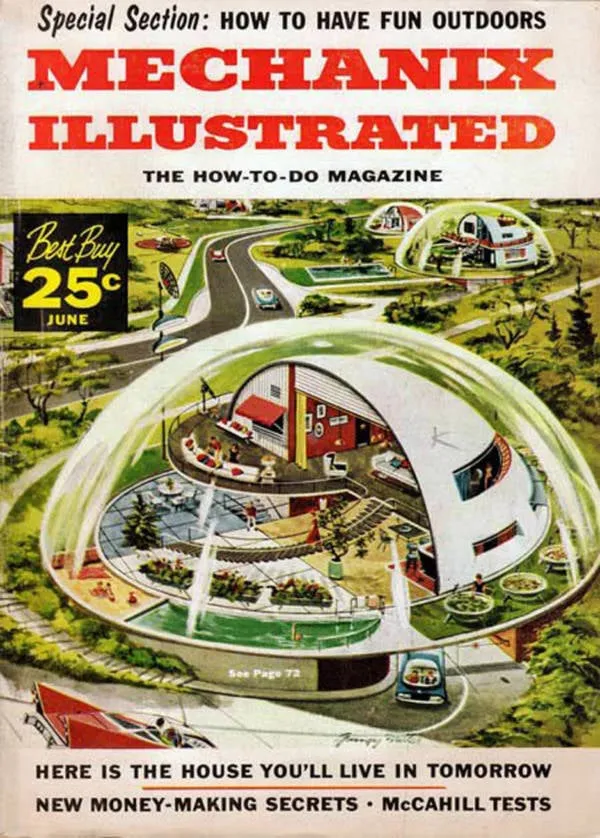
Photo: vintage retro futurism magazine illustration future technology 1960s, via allthatsinteresting.com
Flip through a stack of 1960s Popular Mechanics or pause on one of those grainy 'life in the year 2000' films that studios loved to produce, and you'll find a strange mix of dead-on prophecy and spectacular whiffing. The futurists of the Space Age weren't guessing randomly — they extrapolated from the tech of their day, which is exactly why some predictions landed with eerie precision and others are still waiting for their moment, sixty years late.
Here's the scorecard.
The Five That Shipped
1. The Videophone. The 1964 World's Fair famously debuted AT&T's Picturephone, a $175-per-minute (in today's money) video call device that flopped commercially. The vision was right; the timing was off by a few decades. Today your phone does it for free, and the pandemic made video calls as ordinary as the rotary dial. Verdict: predicted, delivered, and then some.
2. The Home Robot Servant. Vintage illustrations showed chrome butlers mixing cocktails. What we actually got is arguably better: Roombas vacuuming on schedule, lawn-mowing robots, and AI assistants that dim the lights on voice command. The humanoid form factor is only now arriving — see the current wave of home robotics startups — but the function showed up right on schedule.
3. The Wristwatch Communicator. Dick Tracy's two-way wrist radio was pure comic-strip fantasy in the '60s. Then the Apple Watch shipped in 2015 and now something like a third of American adults wear a computer on their wrist that takes calls, texts, and reads their heartbeat. Futurists nailed this one down to the accessory.
4. The Self-Driving Car. GM's Futurama exhibits and countless magazine covers promised hands-free highways. Full autonomy is still a work in progress, but the reality check is real: robotaxis now carry paying passengers in Phoenix, San Francisco, and Los Angeles. Late, but no longer fiction.
5. The Flat Wall Screen. '60s futurists drew living rooms with thin displays mounted like paintings. They were off on the timeline by a couple of decades but dead-on about the form factor. Your 85-inch OLED panel hanging on the wall is exactly what they drew, minus the single channel broadcast from the sky.
The Five Still on Layaway
1. The Jetpack. The most iconic broken promise of the Space Age. The problem was never building one — it's energy density. Batteries and fuel simply can't deliver rocket-like thrust for useful durations without turning your commute into a fire hazard. Personal eVTOL aircraft are the closest we've gotten, and even those are stuck in regulatory molasses.
2. The Flying Car. See above, plus one extra problem: nobody wants your neighbor piloting a 3,000-pound machine over their roof. The tech is inching forward; the FAA paperwork is a glacier.
3. The Robot Maid Who Does Your Laundry. Vacuuming floors is two-dimensional and forgiving. Folding laundry is a nightmare of soft, deformable objects — one of the hardest problems in robotics, embarrassingly. Laundry-folding machines exist; none have earned a spot in a normal American home.
4. Undersea Cities. Jacques Cousteau-era optimism had us living in ocean habitats by the '90s. Turns out humans hate pressure, corrosion, and breathing water. The ocean remains undefeated.
5. Meals in a Pill. The futuristic dinner was a single tablet replacing roast beef and potatoes. Food science killed this one: a day's nutrition is simply too much mass and chemistry to compress into a pill, which is why meal-replacement drinks remain the closest approximation — and why they've never replaced dinner.
Why Predictions Fail (and Why That Matters Now)
The pattern across the misses is consistent: futurists extrapolate technology but ignore physics, economics, and regulation. Jetpacks die on energy density. Flying cars die on insurance and air-traffic law. Laundry robots die on the physics of socks.
Which should make you a little skeptical of today's breathless predictions — humanoid robots in every kitchen by 2030, AGI by Friday. The '60s teach a useful filter: ask not whether something can be built, but whether the energy, the economics, and the paperwork will let it ship.
Sometimes they will. Your wristwatch called, and it wants to know why you're still skeptical.