Beam Me the Receipt: 7 Sci-Fi Movie Gadgets You Can Actually Buy (and 3 That Physics Killed)
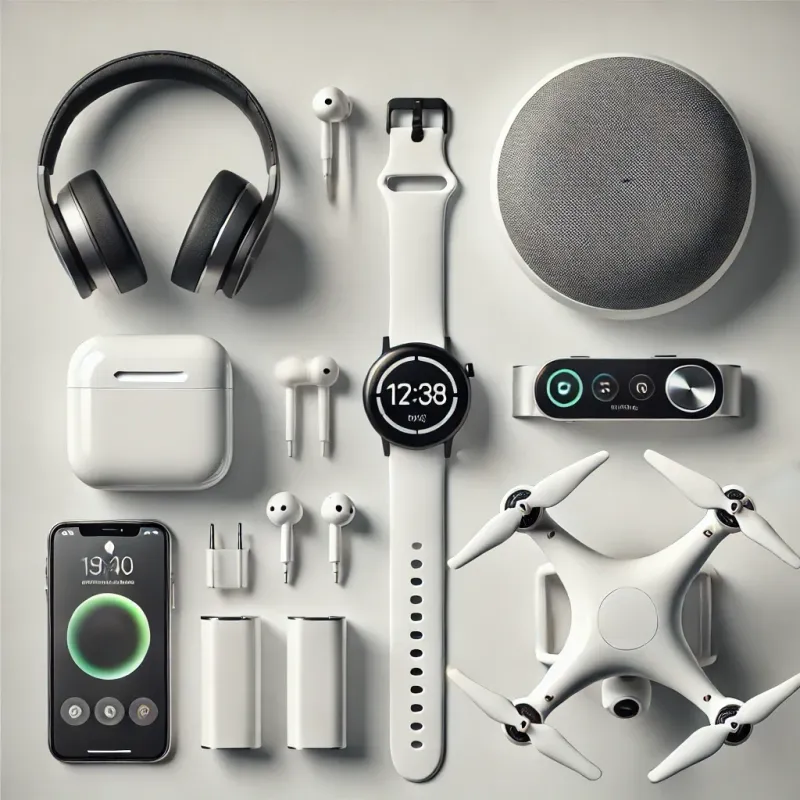
Photo: futuristic gadget flat lay with earbuds smartwatch drone on desk, via bobea.net
Every sci-fi fan has done it: watched a movie in 1997 and thought, "I want that." The twist is that a surprising amount of that wishlist has quietly shipped — no dramatic keynote, no flying-car parade. Here's what you can actually buy, what it can't do, and the three gadgets that are never coming home.
1. Universal Translators: Star Trek's Communicator → Real-Time Translation Earbuds
The real thing: earbuds from brands like Timekettle and Pocketalk's handhelds translate live conversation across dozens of languages. The catch: they're impressive with slow, clear speech in quiet rooms and fall apart in a noisy Chicago restaurant or with heavy regional slang. Latency of a second or two also kills the natural rhythm of conversation. Still — a Houston truck driver and a Guadalajara supplier can roughly do business. That's not nothing.
2. Self-Lacing Shoes: Back to the Future Part II → Auto-Lacing Sneakers
Nike's Adapt line and successors actually do the power-lace thing — motors, app control, the works. The catch: they're heavy, battery-powered, and cost more than a decent laptop. The lacing is genuinely useful for adaptive-fit needs, but for most of us it's a party trick with a charging cable.
3. Holographic Interfaces: Minority Report → Spatial Displays and Gesture Control
Tom Cruise's glove-flailing screens begat a generation of gesture tech. Today's version: spatial displays like those from Looking Glass, and depth cameras (leap-motion-style controllers) that let you push virtual objects around. The catch: it's a 3D display, not a free-floating hologram — you need the right viewing angles, and nobody has solved mid-air projection. But a desktop "holographic" monitor is a real thing you can buy right now.
4. The Smartwatch: Dick Tracy → Every Smartwatch Ever
The most boring prediction on this list and the most accurate. Two-way video calls from your wrist? Done. The catch: battery life still stinks and typing on a 44mm screen remains an act of faith.
5. Video Calls on Walls: 2001: A Space Odyssey → Smart Displays and Projectors
Kubrick's video phones nailed it, minus the booth. Smart displays and portable projectors have turned any wall into a FaceTime screen. The catch: America's WiFi is not the Enterprise's comms array.
6. Drone Cameras: Thunderbirds-style aerial recon → Consumer Camera Drones
Aerial cinematography went from Hollywood-only to a $400 holiday gift. The catch: FAA registration, geofencing, and a 30-minute battery ceiling keep it from feeling like total freedom.
7. Bone-Conduction Audio: The Matrix's "I know kung fu" → Open-Ear Headphones
Not quite a download to your brain, but bone-conduction headsets pipe sound through your skull while leaving your ears open to traffic — a genuine safety win for runners.
And the 3 That Never Will
Teleportation. Moving a human means converting ~10²⁷ atoms into data and reassembling them. The energy requirements are absurd, and philosophically, the thing that walks out the other side is a copy. Hard pass.
Lightsabers. A plasma blade needs a power source and a container for plasma that's a meter long and doesn't melt your hand. Real plasma torches exist; they're industrial cutters with tanks of equipment. There is no battery small enough, and no material for the handle that survives.
True Invisibility Cloaks. Metamaterials can bend specific wavelengths around objects — in labs, at microscopic scales, for narrow color bands. Bending all visible light around a human-sized, moving, three-dimensional object in real time defies current materials science and probably economics.
The lesson: sci-fi's batting average is better than you'd think — it just always takes longer and arrives with more charging cables than the movies promised.