Silicon Sovereignty: Why Google, Meta, and Amazon Are Rushing to Build Their Own Chip Factories
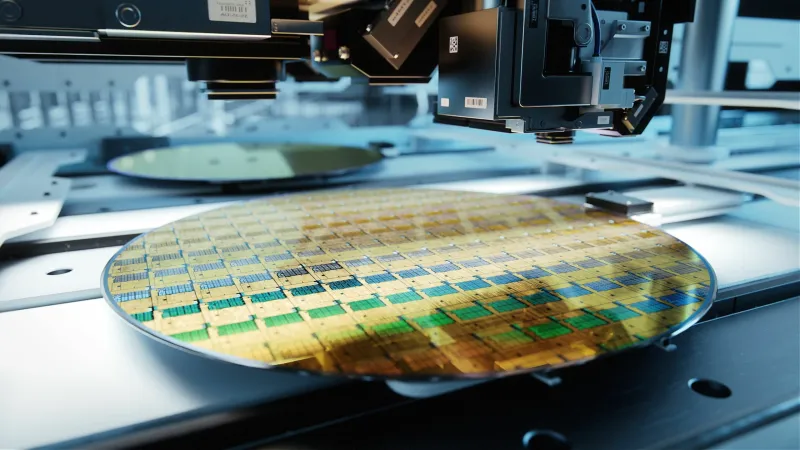
Photo: semiconductor chip factory manufacturing facility aerial view, via semiengineering.com
For decades, the semiconductor world ran on a kind of polite interdependence. Tech giants designed chips. TSMC and Samsung built them. Everyone went home happy. That arrangement is quietly coming apart — and the companies doing the dismantling are the same ones that used to be TSMC's best customers.
Google, Meta, Amazon, and Tesla are each, in their own way, sprinting toward vertical integration at a scale the industry hasn't seen since the days of IBM's mainframe empire. The question isn't whether this shift is happening. It's whether anyone outside the hyperscaler club survives it in one piece.
The Dependency Problem Nobody Wanted to Talk About
The Taiwan Strait is about 110 miles wide. For a while, that felt like a diplomatic abstraction. Then came 2021, the global chip shortage, and a rude awakening for every executive who'd assumed semiconductor supply chains were someone else's problem.
When COVID disrupted production and geopolitical tensions around Taiwan sharpened, the fragility of concentrating so much of the world's advanced chip manufacturing in one geography became impossible to ignore. TSMC alone accounts for roughly 90% of the world's most advanced semiconductors. That's not a supply chain — that's a single point of failure dressed up in corporate language.
For hyperscalers running AI training clusters that burn through tens of thousands of chips at a time, this wasn't just a risk management headache. It was an existential threat to their ability to compete. So they started building.
What Each Player Is Actually Doing
Google has been at this the longest. Its Tensor Processing Units — TPUs — have been running inside Google's data centers since 2016. But the company has quietly expanded that effort into a broader custom silicon program that now spans everything from its Pixel phones to its search infrastructure. Google doesn't manufacture its own wafers yet, but the design independence it's built gives it leverage TSMC can't easily replicate.
Meta accelerated hard after getting caught flat-footed during the AI boom. The company has poured resources into its MTIA (Meta Training and Inference Accelerator) chip program, explicitly designed to reduce dependence on Nvidia's GPUs for running its recommendation algorithms and generative AI models. Meta's not building fabs either — at least not publicly — but it's funding advanced packaging research and exploring partnerships that could eventually get it closer to that goal.
Amazon's AWS division has arguably gone furthest in terms of deployed custom silicon. Its Graviton processors now power a significant chunk of AWS workloads, and its Trainium and Inferentia chips are direct shots at Nvidia's data center dominance. Amazon has also invested in Anthropic and other AI ventures that create internal demand for chips it wants to control end-to-end.
Tesla is the wildcard. The company already manufactures its own Dojo supercomputer chips and has been quietly expanding its semiconductor ambitions in ways that go well beyond automotive AI. Elon Musk has made no secret of his desire to bring more manufacturing in-house — and Tesla's vertical integration instincts run deeper than almost any other tech company operating today.
The Geopolitical Engine Underneath All This
None of this is happening in a vacuum. The CHIPS and Science Act pumped $52 billion into domestic semiconductor manufacturing, and while Intel has grabbed most of the headline funding, the broader signal it sent to every tech boardroom was unmistakable: Washington wants chip independence, and it's willing to pay for it.
That political tailwind matters. Building advanced semiconductor fabs is extraordinarily expensive — we're talking $20 billion or more for a single cutting-edge facility. Without government incentives and the scale that only hyperscalers can bring, the economics simply don't work for most players. But for companies with the balance sheets of Google or Amazon, the calculus is shifting.
The geopolitical dimension extends beyond Taiwan. Export controls on advanced chips to China have created a bifurcated global market, and companies that control their own silicon can navigate those restrictions in ways that pure fabless designers can't. Vertical integration isn't just about efficiency — it's about staying nimble in an increasingly fragmented regulatory environment.
What This Means for Everyone Who Isn't a Hyperscaler
Here's where things get uncomfortable for the rest of the ecosystem.
When Google optimizes a chip specifically for its AI workloads, it's not building general-purpose hardware that startups can rent cheaply. It's building a moat. The same goes for Amazon's Trainium — yes, AWS customers can access it, but the pricing and availability are ultimately controlled by Amazon, which is also your direct competitor in cloud services.
For AI startups that don't have the capital to design custom silicon, this creates a layered dependency problem. You're renting compute from a company that's actively competing with you, running on chips that company optimized for its own workflows, at prices that company sets unilaterally. That's not a neutral infrastructure play. That's a strategic chokehold dressed up as a cloud service.
Smaller chip designers — the Cerebras-es and SambaNova-s of the world — are feeling the squeeze too. When your potential customers are building their own chips, your addressable market shrinks. The startups that survive this era will be the ones that find workloads the hyperscalers don't care about, or that out-innovate on specialization in ways that billion-dollar internal programs can't match.
Consumers aren't immune either. The vertical integration of chips into walled gardens means the hardware inside your devices increasingly reflects the priorities of one company's internal roadmap rather than the broader competitive market. That's not inherently bad — Apple's M-series chips have been genuinely transformative — but it does reduce the diversity of approaches that drive long-term innovation.
The Part Nobody's Saying Out Loud
The hyperscaler chip push is, at its core, a bet that the AI era will be so compute-intensive and so strategically important that controlling your own silicon is worth any price. And based on what we've seen from GPT-4, Gemini, and the wave of models behind them, that bet looks increasingly smart.
What it also means is that the semiconductor industry is quietly reorganizing itself around a small number of extraordinarily powerful actors. TSMC isn't going anywhere — the hyperscalers still need advanced manufacturing even if they're designing more of their own chips. But the balance of power is shifting, and the companies that understood that early are already pulling ahead.
For everyone else, the message is clear: the era of neutral, fungible compute infrastructure is ending. The silicon is getting personal. And if you're building anything that depends on chips you don't control, you might want to start thinking about what that means for your roadmap.