Your Tech Knows Exactly What You Want — And That Might Be the Problem
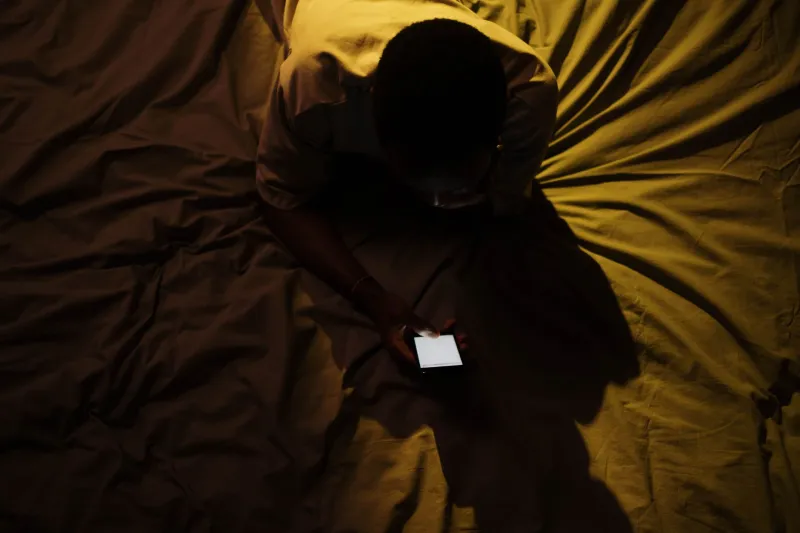
Let me paint you a picture of a Tuesday evening in 2025. You get home, your smart thermostat has already set the temperature to the exact degree you prefer. Your streaming service cues up a show its algorithm knows you'll love before you even sit down. Your Spotify Discover Weekly nails it again — every song feels handpicked. Your phone's news feed has already filtered out the stories it predicts you'll find irritating or irrelevant. Dinner arrives via an app that remembered your usual order.
Now ask yourself: when was the last time something surprised you? When did you last stumble into a piece of music you didn't know you needed, or a conversation that changed how you thought about something, or a movie recommendation from a friend who knows you in a way no algorithm does?
That's the thing nobody's talking about loudly enough. We've built technology that's extraordinarily good at giving us what we want — and in doing so, we may have quietly built the most sophisticated isolation machine in human history.
The Comfort Trap
Personalization isn't inherently sinister. Nobody's sitting in a boardroom at Spotify twirling a mustache and plotting to make you lonely. The engineers building recommendation systems are genuinely trying to solve a real problem: there's too much content, too little time, and helping people find things they'll enjoy is a legitimate service.
But optimization has side effects. When a system is tuned entirely around your existing preferences, it creates a feedback loop with no exit ramp. You listen to music that sounds like music you've already liked. You read articles that confirm what you already believe. You watch shows that hit the same emotional notes as shows you've already finished. The algorithm isn't exposing you to your world — it's reflecting your world back at you, slightly shinier.
Psychologists have a term for the mental space this creates: a comfort bubble. And while comfort bubbles feel good, they're not great for growth, empathy, or the kind of serendipitous connection that has historically been the engine of culture.
When the Smart Home Gets Too Smart
The smart home pitch is easy to love. Lights that know when you want them dim. A coffee maker that starts brewing when your alarm goes off. Speakers that adjust volume based on whether you're on a call. None of this sounds threatening in isolation.
But zoom out. A home environment engineered entirely around one person's preferences — or one family's, but increasingly, one person's — becomes a kind of sensory fortress. Everything is calibrated to you. Everything performs for you. The friction that comes from coexisting with other people's preferences, compromising on what to watch, negotiating the thermostat, tolerating your roommate's music — that friction is being quietly eliminated.
Friction, it turns out, is social infrastructure. The small negotiations of shared life are how people learn to understand each other. Remove enough of it, and you stop practicing a skill that matters enormously: tolerating, adapting to, and ultimately connecting with people who are not exactly like you.
The Serendipity Deficit
There's a reason the best stories about how people met their closest friends or discovered their favorite bands almost always involve an element of accident. Someone played a song at a party you didn't choose to attend. A coworker left a book on a break room table. A stranger on the subway was watching something that made you curious enough to ask.
Algorithms are, by design, anti-serendipitous. They exist to reduce the chance of you encountering something you didn't already signal an interest in. And the better they get, the more effective they become at sealing those gaps.
This isn't a hypothetical concern. Research from institutions including MIT and the University of Pennsylvania has repeatedly shown that social media recommendation algorithms tend to drive users toward increasingly narrow content clusters over time. The platforms know this. Some have tried to address it with features designed to inject novelty — Twitter's old "While you were away" summaries, TikTok's occasional off-algorithm wildcards. But these are cosmetic patches on a fundamentally homogenizing system.
The Loneliness Numbers Are Already Bad
Here's the uncomfortable backdrop to all of this: the US is in the middle of a loneliness epidemic that predates the pandemic and has only deepened since. The Surgeon General issued an advisory on it in 2023. Roughly half of American adults report measurable feelings of loneliness. Young adults — the demographic most saturated with personalized technology — report the highest rates.
Correlation isn't causation, and it would be reductive to pin a complex social phenomenon entirely on recommendation algorithms. Economic precarity, urban design, declining participation in civic institutions — these all play roles. But technology that actively reduces the need for human contact, that makes solitude more comfortable and self-contained than ever before, is at minimum not helping. And at maximum, it's a significant accelerant.
The smart home that anticipates your every need is also a home that gives you fewer reasons to call someone. The perfectly curated feed is also a feed that never shows you anything that might make you want to share it with someone else.
This Isn't Anti-Tech — It's Pro-Intentionality
None of this is an argument for going back to dumb phones and rabbit-ear antennas. The tools we have are genuinely powerful and genuinely useful. But there's a difference between technology that serves human connection and technology that substitutes for it.
The most interesting thing happening in some corners of the tech world right now is a quiet pushback against pure personalization. Some app developers are experimenting with "randomness layers" — intentional injections of off-profile content designed to surface unexpected interests. Some social platforms are testing features that encourage users to engage with people outside their existing networks.
These are small experiments, and they're swimming against a very strong current. The business incentives for keeping you in your comfort bubble are enormous — engaged users who feel understood spend more time on platform and more money on subscriptions.
But maybe the next frontier for great technology isn't knowing you better. Maybe it's knowing when to introduce you to something — or someone — you didn't know you were missing.