Right to Repair Gets Real: The Modular Hardware Wave That's Challenging Big Tech's Throwaway Culture
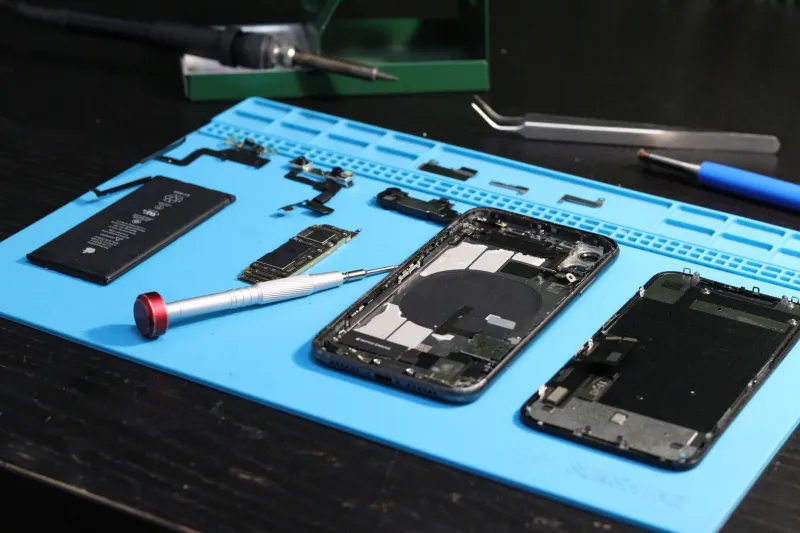
Somewhere in a landfill in the American Midwest, there's a perfectly functional laptop that died because a $4 charging port gave out and the manufacturer made it economically impossible to fix. There's a smartphone with a cracked screen that cost more to repair than a new budget model. There's a pair of wireless earbuds with a dead battery that can't be replaced because the casing is glued shut.
For decades, this has been the deal consumers implicitly accepted: buy a device, use it for a couple of years, replace it when it breaks or gets slow, repeat. The tech industry called it innovation. Critics called it something less flattering. Now, a coalition of startups, legislators, and genuinely angry consumers is calling it over.
Framework Changed the Conversation
If there's a single company that crystallized what modular hardware could look like for everyday users, it's Framework Computer. The company launched its first laptop in 2021 with a concept so obvious it's almost embarrassing that nobody mainstream had done it: make every component swappable, document everything, and sell replacement parts directly to users at fair prices.
The Framework Laptop isn't just repairable in theory — it's repairable in your kitchen, with a screwdriver you probably already own. The ports are modular expansion cards you can rearrange based on what you need that day. The battery, keyboard, display, and motherboard all come out cleanly. When a new processor generation drops, you don't buy a new laptop; you buy a new mainboard and keep everything else.
The response from the enthusiast community was immediate and loud. Framework hit waitlist numbers that surprised even its founders. More importantly, it demonstrated that there was real, paying demand for hardware built around longevity rather than planned obsolescence — and that customers would actively choose repairability over the paper-thin aesthetics of a sealed unibody chassis.
Fairphone's Long Game
Framework wasn't the first to plant this flag. Fairphone, a Dutch company, has been building modular smartphones since 2013 — and while it took years to gain meaningful traction in the US market, its latest hardware represents a genuinely mature version of the concept. The Fairphone 5 launched with a promised software support window of ten years and a design where every major component — battery, camera module, screen, speakers — can be swapped out by the user without special tools.
That ten-year support commitment is worth pausing on. In a world where major Android manufacturers typically offer three to four years of OS updates before quietly abandoning devices, Fairphone's timeline is almost provocative. It's a direct challenge to the upgrade cycle that keeps the hardware industry's revenue flowing.
The tradeoff is that Fairphone hardware has historically been a generation or two behind the cutting edge in pure performance terms. But for a growing segment of users — particularly those motivated by sustainability, cost, or simple frustration with forced obsolescence — "good enough hardware that lasts forever" beats "incredible hardware that's a paperweight in three years."
The Legislative Tailwind
What's changed most dramatically in the last two years isn't the hardware — it's the political environment around it. Right-to-repair legislation has gone from a niche hobbyist cause to mainstream policy territory with surprising speed.
Minnesota became the first US state to pass a comprehensive right-to-repair law in 2023, requiring manufacturers to make parts, tools, and repair documentation available to independent shops and consumers. California followed with its own version. At the federal level, the FTC has issued multiple reports supporting repair rights and signaling regulatory interest in manufacturer practices that restrict independent repair.
The pressure has even moved some of the biggest players. Apple — once the undisputed champion of sealed, glued, and proprietary — quietly launched its Self Service Repair program, allowing customers to order genuine parts and access repair manuals for select iPhone and Mac models. It's not exactly a philosophical conversion, but it's a meaningful concession from a company that spent years fighting repair access in courts and lobbying rooms.
Google's Pixel phones have progressively improved their repairability scores on iFixit's rankings. Samsung struck a deal with iFixit to provide parts and guides for its Galaxy line. The industry is reading the room.
Beyond Laptops and Phones: The Modular Peripheral Moment
The modular philosophy is bleeding into product categories you might not expect. Mechanical keyboard culture has long celebrated swappable switches and customizable layouts, but the concept is now reaching mainstream peripherals. Companies like Keychron have built substantial US audiences around keyboards that users can modify, repair, and personalize without voiding warranties.
In the audio space, a handful of startups are experimenting with headphones designed for component replacement — drivers, headbands, and ear cushions sold as individual parts with indefinite availability commitments. It's a direct response to the AirPods model, where a premium product becomes garbage the moment its sealed battery degrades past usability.
Even gaming hardware is getting the treatment. Modular controllers with swappable thumbsticks, triggers, and faceplates have moved from niche accessories to mainstream offerings from brands including Xbox, whose Elite Controller line has made configurability a selling point rather than an afterthought.
The Startup Ecosystem Filling the Gaps
Beyond the established players, a layer of smaller companies is building the infrastructure that makes the modular movement work at scale. iFixit has grown from a repair manual website into a genuine parts retailer and advocacy organization with serious political reach. Marketplace platforms connecting independent repair shops with consumers are professionalizing a sector that was once purely underground.
Startups like Ifixit-adjacent parts networks and regional repair cooperatives are emerging in cities across the US, offering repair services for devices that mainstream retailers won't touch. Some are experimenting with subscription models — pay a monthly fee, get unlimited repairs on a set of covered devices — that align the business incentive with device longevity rather than replacement.
What This Means for the Industry's Future
The throwaway tech model worked when consumers had no alternative and no political recourse. Both of those conditions are changing. The combination of legislative momentum, a vocal and growing consumer segment that actively prefers repairable hardware, and demonstrated proof that modular design can produce competitive products is creating genuine market pressure.
Big manufacturers aren't going to voluntarily abandon the revenue that comes from forced upgrade cycles. But they are, slowly and reluctantly, being pushed toward a world where longevity is a feature rather than a liability.
For early adopters and tech enthusiasts, the message is pretty straightforward: the most interesting hardware of the next five years might not be the thinnest or the most powerful. It might be the device that's still running perfectly in 2032 — because someone built it to last.