The Phone in Your Pocket Is Already a Relic — Here's What Kills It
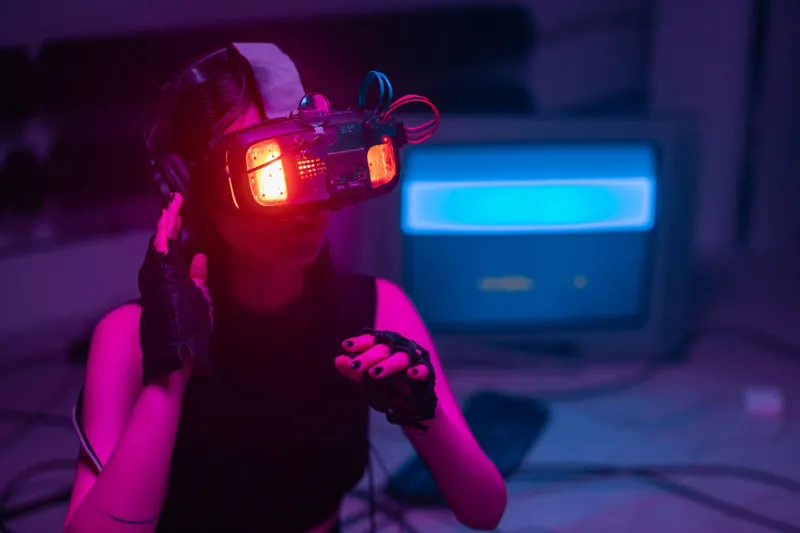
Let me say something that might age poorly or might age perfectly: the smartphone, as we know it today, has maybe five years left as the dominant personal computing device.
I know. You've heard this before. Smartwatches were supposed to replace phones. Google Glass was going to make screens obsolete. VR headsets were going to swallow reality itself. And yet, here we are, all still hunched over the same glass rectangles we've been carrying since the first iPhone dropped in 2007.
But here's the thing — the failures of the past weren't evidence that the phone is immortal. They were evidence that the replacement tech wasn't ready yet. The question isn't if smartphones get displaced. It's when, and by what.
Let's break it down honestly.
The Case Against the Slab
Before we talk replacements, it's worth being clear about what's actually wrong with smartphones in 2024. The hardware has largely plateaued. Camera improvements are incremental. Processor gains are outpacing the software's ability to use them. Battery life is still a daily anxiety for most users. And the fundamental interaction model — stare at a flat glowing rectangle, tap small targets with your thumb — hasn't meaningfully evolved in seventeen years.
More importantly, the smartphone is increasingly a bottleneck. It's the device we use to access AI assistants that could be far more powerful with better sensory inputs. It's the portal to spatial and immersive experiences that a flat screen fundamentally can't deliver. And it's a social liability — the presence of a phone on a table changes the emotional temperature of a conversation. We all know it.
Something better is coming. The debate is about timing and form.
Foldables: Evolution, Not Revolution
The most commercially mature alternative right now is the foldable. Samsung's Galaxy Z Fold series, Google's Pixel Fold, and a wave of Chinese competitors have proven that the form factor is viable — you can genuinely get a near-tablet experience in a pocketable device.
But let's be real: foldables are smartphones with a party trick. They run the same OS, use the same apps, and require the same hunched-over interaction model. They're an iterative improvement, not a paradigm shift. The durability concerns around flexible displays haven't fully gone away, and the price premium is still steep enough to limit mainstream adoption.
Verdict: Worth owning if you want more screen real estate today. Not the future of computing.
AR Glasses: The Most Promising Bet (With the Biggest Asterisk)
This is where things get genuinely interesting. The vision of lightweight AR glasses — something that overlays digital information on the real world without requiring you to pull out a phone — has been the holy grail of personal tech for a decade. And for the first time, the hardware is starting to approach the vision.
Meta's Ray-Ban smart glasses (the second-generation version with Meta AI built in) are a legitimate product that real people are actually wearing in public. They're not full AR — there's no heads-up display — but they demonstrate that AI-connected eyewear can be socially acceptable in a way that Google Glass never managed.
Apple's Vision Pro, meanwhile, is the most sophisticated spatial computing device ever shipped to consumers. It's also $3,500, weighs as much as a small dumbbell, and you can't wear it while walking down the street. It's a developer platform and a proof of concept, not a daily driver.
The path to AR glasses that genuinely replace smartphones requires a convergence of advances: waveguide optics thin enough to fit in normal-looking frames, battery technology that can power a display and compute unit for a full day, and AI systems sophisticated enough to make the interface feel natural without a touchscreen.
Companies like Meta, Apple, Google (reportedly back in the AR game), and a crop of startups including Brilliant Labs and Halliday are all racing toward this. The consensus among people who track this space closely is that genuinely useful AR glasses — not just audio glasses with a camera — are roughly three to five years from a mainstream price point.
Verdict: The most likely heir to the smartphone throne. Watch 2027-2028 as the potential inflection point.
Brain-Computer Interfaces: Real Tech, Wrong Timeline
Neuralink made headlines when it implanted its first chip in a human patient in early 2024. Synchron has been doing similar work with less fanfare. And yes, the science is real — direct neural interfaces can give people with paralysis meaningful control over digital devices using thought alone.
But let's pump the brakes on the consumer BCI hype. Surgical implants are not going to replace smartphones for healthy users in any realistic near-term timeframe. The regulatory pathway alone takes years. The risk profile for elective brain surgery is obviously not comparable to buying a new phone. And non-invasive BCIs — the kind that sit on your head without surgery — are still nowhere near the signal resolution required for complex interaction.
BCIs are transformative medical technology. They are not a consumer product roadmap.
Verdict: Fascinating, important, and genuinely not relevant to this conversation for at least a decade.
AI Wearables: The Dark Horse
The category that's gotten the least attention but might move the fastest is the ambient AI wearable. The Humane AI Pin was a high-profile stumble, but the concept — a persistent, voice-and-gesture-driven AI assistant that lives on your body and handles most of the tasks you currently use your phone for — is sound.
The Rabbit R1 had similar ambitions and similar limitations. But both devices were first-generation attempts at a genuinely new paradigm, and first-generation attempts almost always disappoint.
What a mature version of this category looks like: a small, elegant device (clip, pendant, or earbud-adjacent) with always-on AI that handles communication, information retrieval, scheduling, and ambient context awareness. Paired with AR glasses for visual output, this combo could genuinely replace the smartphone for the majority of daily use cases.
Verdict: Underrated. The combination of ambient AI wearables plus AR glasses is the most plausible near-term replacement stack.
Where Should You Actually Put Your Attention?
If you're an early adopter trying to figure out where to invest your time and money as this transition unfolds, here's the honest take:
Buy second-gen Meta Ray-Ban glasses if you want a taste of what's coming — they're genuinely useful today. Watch Apple's Vision Pro ecosystem closely; whatever they ship at a $1,000-1,500 price point in the next two years will be the clearest signal of where consumer AR is heading. Ignore BCI consumer hype for now. Stay curious about the ambient AI wearable space — the breakthrough product in this category probably hasn't shipped yet.
The smartphone isn't dying tomorrow. But the writing is on the wall — or more accurately, it'll soon be projected right in front of your eyes.