Charged Up and Weird: The Next-Gen Battery Tech That's About to Flip Your Gadget Life Upside Down
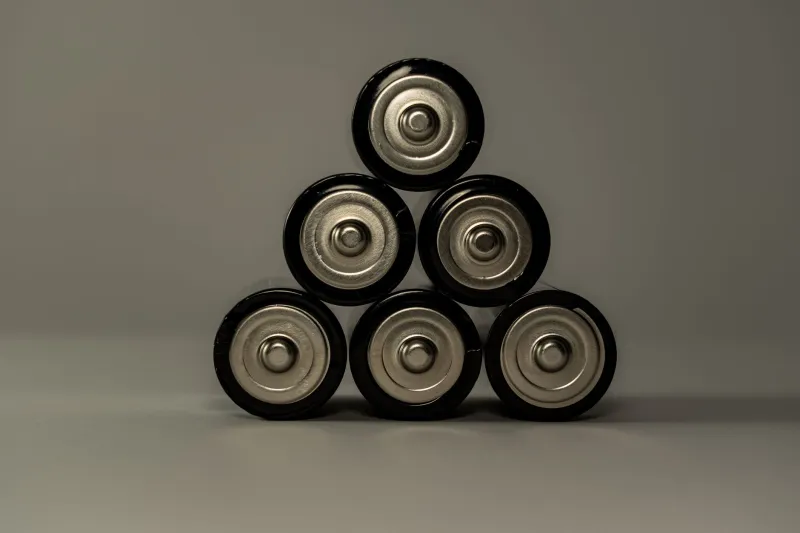
Let's be honest. The battery in your phone is kind of embarrassing in 2025. Screens are sharper than your own eyes. Chips are running AI models locally. Your camera can identify a bird species mid-flight. And yet, at 2 PM on a Tuesday, you're still hunting for an outlet like it's 2012.
The dirty secret of the gadget industry is that batteries — the one component every single device depends on — have been coasting. Incremental gains, same basic lithium-ion chemistry, same anxiety-inducing battery percentage creeping toward zero. But behind the scenes, something genuinely strange and exciting is brewing. And if even half of it makes it to market, the way you think about device power is going to change completely.
The Solid-State Moment Is (Finally) Getting Real
Solid-state batteries have been the "five years away" promise of the energy world for what feels like forever. But the timeline is actually tightening up, and this time there's real money behind it.
Unlike conventional lithium-ion batteries, which use a liquid electrolyte to shuttle ions between electrodes, solid-state designs replace that liquid with a solid material — ceramic, glass, or a polymer composite, depending on who you ask. The upside? Dramatically higher energy density, faster charging, and a much lower risk of catching fire. That last part matters more than people realize — liquid electrolytes are flammable, which is why your laptop bag occasionally becomes a news story.
Toyota has been beating the solid-state drum loudly for EVs, but the ripple effects for consumer electronics could be just as significant. Startups like Solid Power and QuantumScape have been grabbing headlines (and serious investment), while smaller players operating out of university spinoffs are quietly filing patents that could reshape everything from smartwatches to laptops.
The catch? Manufacturing solid-state cells at scale is genuinely hard. The materials are finicky, the production processes are expensive, and getting consistent performance out of a solid electrolyte is a different beast than the liquid-based assembly lines that have been refined over decades. That's a big reason why the big consumer electronics players — your Apples, your Samsungs — haven't pulled the trigger yet. They're waiting for someone else to solve the manufacturing headache first.
Bio-Inspired Power: Nature's Been Doing This Longer Than We Have
Here's where things get genuinely weird, in the best possible way.
A handful of research teams — including groups at MIT and Stanford — have been looking at biological systems for inspiration on energy storage and generation. The human body, after all, manages to run a remarkably complex system on roughly 2,000 calories a day. That's efficient in ways that make a lithium-ion cell look clunky.
One avenue getting real traction is enzymatic biofuel cells — tiny power sources that generate electricity by oxidizing organic compounds, similar to how cells in your body metabolize glucose. Researchers have demonstrated prototypes that could theoretically harvest energy from sweat or ambient biological fluids. Wearables that charge themselves while you work out aren't science fiction anymore — they're a research milestone away from prototype stage.
Then there's the work being done on piezoelectric nanogenerators, materials that convert mechanical movement — like the flex of fabric or the vibration of a surface — into electrical current. Imagine a smartwatch that partially recharges every time you move your wrist. The energy yields are still small, but combined with increasingly power-efficient chips, the math starts to work.
These aren't products you'll find at Best Buy next month. But the pace of progress in this space has accelerated noticeably in the last two years, and some of the startups commercializing adjacent tech are already in early-stage talks with wearable manufacturers.
So Why Are the Big Players Dragging Their Feet?
This is the part that'll make you want to throw your phone across the room.
Major manufacturers have enormous infrastructure investments tied up in existing battery supply chains. The factories, the supplier relationships, the testing protocols — all of it is optimized for lithium-ion. Pivoting to a fundamentally different chemistry means retooling facilities, retraining engineers, and absorbing years of transition costs. For a company managing quarterly earnings calls, that's a tough sell even when the long-term upside is obvious.
There's also a consumer expectation problem. People have been trained to manage battery life — we dim screens, kill background apps, carry charging bricks the size of a deck of cards. Manufacturers know this. As long as a phone gets through a day on a charge, the pressure to revolutionize the power system stays manageable. It's not great, but it's good enough, and "good enough" is a powerful force in product development.
The startups, though? They don't have legacy infrastructure to protect. Companies like Enovix, which went public a few years back and has been shipping silicon-anode batteries with meaningfully better energy density than standard lithium-ion, are already in consumer devices. They're not waiting for permission.
What This Means for Your Next Gadget Buy
If you're in the market for a new phone, laptop, or wearable in the next year or two, here's the practical read: you probably won't see a dramatic battery revolution in the mainstream yet. But you might start seeing the early edge of it.
Silicon-anode batteries — a less radical but very real improvement over standard lithium-ion — are already showing up in some devices and offer notably better capacity in the same physical footprint. Pay attention to which manufacturers are using them; it's a signal that a company is actually investing in battery innovation rather than just bumping the milliamp-hour count.
For wearables specifically, the next 18 to 24 months could be genuinely interesting. The form factor constraints on smartwatches and fitness trackers are so severe that any meaningful energy density improvement translates almost immediately into better battery life or a slimmer design. That's where the pressure to innovate is highest, and it's where you're most likely to see new battery tech debut in a real product.
And if you're the type who geeks out on this stuff — keep an eye on the solid-state space. The manufacturing challenges are real, but they're not insurmountable. When the first mainstream consumer device ships with a solid-state cell and legitimate multi-day battery life, it's going to hit like a reset button on how we think about portable power.
The Bottom Line
Batteries have been the unglamorous footnote of the tech spec sheet for too long. The conversation has always been about processors, cameras, and displays — the stuff that's easy to demo. But power is the foundation everything else runs on, and the foundation is finally getting interesting.
The weird new energy tech coming out of labs and startups isn't just an incremental upgrade story. It's a potential paradigm shift in what a device can be — and how long it can run before you have to go hunting for that outlet. Stay tuned, because this one's worth watching.