For most of the last decade, AI has been a cloud problem. You ask your phone something smart, your phone whispers it to a data center in Virginia, that data center thinks really hard for a split second, and then it whispers the answer back. It works. But it's also kind of weird when you think about it — all that intelligence, and your device is basically just a fancy messenger.
That's changing. Fast.
Edge AI — the practice of running machine learning models directly on the hardware you're holding, wearing, or driving — is moving from a niche engineering flex to a genuine paradigm shift. And the implications for early adopters, privacy advocates, and anyone who's ever cursed at a spinning loading indicator are pretty significant.
What Even Is Edge AI, Really?
Strip away the jargon and edge AI is simple: instead of sending your data somewhere else to be processed, the processing happens locally. On your phone. On your laptop. On a camera, a thermostat, a pair of earbuds, a car dashboard.
The "edge" just means the far end of the network — your end. As opposed to the center, which is where the cloud lives.
This isn't entirely new. Voice assistants have used some on-device processing for years to detect wake words like "Hey Siri" or "OK Google" without constantly streaming audio. But what's new is the scope. We're now talking about running legitimately complex AI tasks — image recognition, real-time translation, generative text, health diagnostics — entirely without a network connection.
The Hardware Making It Possible
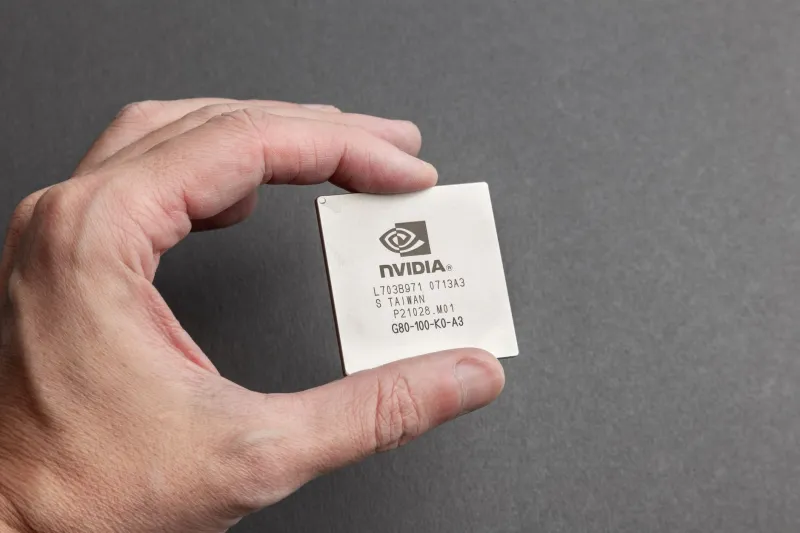
None of this works without serious silicon, and that's where the real story is.
Apple has arguably led the charge here. The Neural Engine baked into every A-series and M-series chip is purpose-built for machine learning workloads. When your iPhone processes Face ID, edits a photo with computational photography magic, or runs on-device Siri requests, that's the Neural Engine doing the heavy lifting — no ping to Cupertino required. With Apple Intelligence features rolling out across iOS 18 and macOS Sequoia, the company is doubling down hard on this approach.
Qualcomm is coming in just as aggressively from the Android side. The Snapdragon 8 Elite — the chip powering flagship Android devices right now — includes a dedicated Hexagon NPU (neural processing unit) capable of running large language models locally. Qualcomm has been particularly vocal about its "AI PC" push, targeting Windows laptops that can run AI workloads without a subscription to some cloud service.
And then there's the startup layer. Companies like Hailo, Kneron, and Syntiant are building specialized AI chips for everything from smart security cameras to industrial sensors. These aren't consumer brands you'd recognize at Best Buy, but they're quietly embedding intelligence into infrastructure that most people never think about.
Why This Actually Matters for You
Okay, so chips are getting smarter. Why should you care?
Latency is the obvious one. When AI runs locally, responses are nearly instantaneous. There's no round-trip to a server, no dependency on your Wi-Fi signal, no throttling during peak hours. For applications like real-time translation, AR overlays, or medical monitoring, that millisecond gap between cloud and device isn't trivial — it's the difference between useful and useless.
Privacy is the bigger deal, though. Every time your data leaves your device, you're trusting someone else's infrastructure, someone else's security practices, and someone else's data retention policies. On-device AI keeps your information on your device. Full stop. Your health data, your photos, your messages — none of it has to touch an external server to be analyzed and acted on. For a lot of Americans who've grown increasingly skeptical of Big Tech data practices, this isn't a minor perk. It's the whole point.
Then there's reliability. Cloud-dependent features break when connectivity breaks. Ask anyone who's tried to use a smart home device during an outage — suddenly your $300 thermostat is just a very expensive paperweight. Edge AI means features that work whether you're in a subway tunnel, a rural cabin, or in the middle of a flight over the Pacific.
The Catch (Because There's Always a Catch)
Running sophisticated AI on-device isn't free. It demands more from your hardware — more memory, more processing power, more battery. There's a real tradeoff between capability and longevity, and manufacturers are still figuring out how to balance it.
There's also the update problem. Cloud AI models can be improved and redeployed instantly, across millions of users, without anyone lifting a finger. On-device models are baked into firmware and app updates, which means slower iteration cycles and the possibility that your device's AI falls behind what's available in the cloud.
And honestly? Not every use case makes sense at the edge. Training large models, processing massive datasets, running complex simulations — that still belongs in the cloud. Edge AI isn't about replacing centralized computing. It's about being smarter about where each task runs.
The Stack Is Shifting
For early adopters, this matters beyond just the devices themselves. The software ecosystem is being rebuilt around on-device inference. Apple's Core ML, Google's TensorFlow Lite, and Meta's PyTorch Mobile are all frameworks designed to let developers deploy AI models locally. That means the apps you'll be using in two or three years are being architected right now around the assumption that your hardware can handle the intelligence itself.
Developers building for this future are thinking differently about architecture, about data flow, about what even needs to leave the device. It's a fundamental rethink of the tech stack — and the early adopter community is going to feel that shift before anyone else.
The Bigger Picture
There's something almost philosophical about this transition. For years, "smart" technology implied a connection to something bigger, something remote, something you didn't control. Edge AI flips that. Your device gets smarter not because it's leaning on a data center, but because it's genuinely capable on its own.
Data sovereignty — the idea that you own and control your own information — stops being an abstract concept and starts being a hardware feature. That's a pretty radical shift from where we were even five years ago.
We're not there yet. The cloud isn't going anywhere, and hybrid approaches that blend local and remote processing will likely dominate for a while. But the direction is clear. Intelligence is migrating toward the edge, toward your hands, toward the devices you actually touch.
And if the last few years of tech history have taught us anything, it's that once a shift like this gets momentum, it tends to move a lot faster than anyone predicted.