High-FPS Gaming on a Ramen Budget: The Tech Quietly Closing the Gap Between $500 and $3,000 Rigs
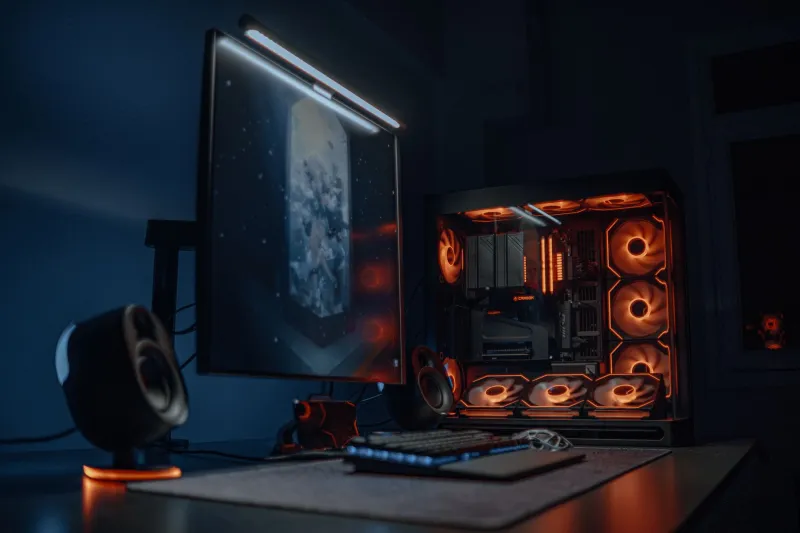
For years, the PC gaming world operated on a pretty simple — if brutal — rule: you get what you pay for. Want silky framerates and jaw-dropping visuals? Open your wallet wide. That $3,000 rig wasn't a flex; it was the admission ticket. But something interesting is happening in 2024 and beyond. The gap between a budget build and a premium powerhouse is quietly, almost sneakily, shrinking — and a handful of emerging technologies deserve the credit.
If you're a budget-conscious early adopter who's been eyeing a gaming PC upgrade, this might be the moment you've been waiting for.
The AI Upscaling Revolution Nobody's Talking About Enough
Let's start with the biggest game-changer (pun absolutely intended): AI-driven upscaling. Nvidia's DLSS — Deep Learning Super Sampling — has been around for a few years, but version 4 is a different animal entirely. Rather than simply rendering at a lower resolution and stretching the image, DLSS 4 uses a transformer-based neural network model to predict and generate frames with genuinely impressive accuracy. The result? Your mid-range GPU is essentially faking frames that look almost indistinguishable from natively rendered ones.
For a gamer running an RTX 4060 — a card you can snag for well under $300 — DLSS 4 with Multi Frame Generation can push output frame rates that previously required cards two or three tiers above it. You're not imagining performance that doesn't exist; you're leveraging machine learning to make the hardware you have work smarter.
AMD's FSR (FidelityFX Super Resolution) and Intel's XeSS are playing the same game, and crucially, FSR works across a much wider range of hardware — including older cards and even consoles. The upshot is that AI upscaling is no longer a premium feature. It's becoming table stakes.
RTX Remix: When Old Games Get a Next-Gen Makeover for Free
Here's one that flew under the radar for a lot of casual gamers: Nvidia's RTX Remix is an open modding platform that lets creators remaster classic PC games with full ray tracing, AI-upscaled textures, and modern rendering pipelines. The kicker? It's free, and the modding community has already started going wild with it.
What this means practically is that your $500 build doesn't just run new games better — it can run beloved older titles with visuals that would make a 2019 flagship GPU sweat. Games like Portal and Half-Life 2 have already been showcased running with physically accurate lighting that would've been unthinkable on their original engines. For budget gamers, RTX Remix is essentially a library expansion and a visual upgrade rolled into one, with no additional hardware spend required.
This is the kind of democratization that changes the math on gaming investment entirely.
Cloud Gaming: The Dirty Secret Budget Builders Are Using
Okay, cloud gaming has had a rocky reputation. Google Stadia's spectacular flameout didn't help. But the infrastructure has matured considerably, and services like Nvidia GeForce Now, Xbox Cloud Gaming, and Amazon Luna are genuinely viable options for a growing slice of game libraries — especially if you've got a solid internet connection.
The pitch for budget builders is straightforward: pair a modest local machine with a cloud gaming subscription for the handful of titles that absolutely demand cutting-edge horsepower. You're not streaming everything — you're being strategic. Run your indie games, older titles, and esports staples locally. Fire up the cloud for that one AAA blockbuster that would otherwise require a GPU upgrade.
GeForce Now's RTX 4080 tier, for instance, lets you stream games at 4K/120fps with ray tracing for $19.99 a month. Compare that to the cost of buying an RTX 4080 outright — currently hovering around $1,000 — and the math starts looking very different for someone who doesn't need that performance level every single day.
Indie Studios Are Raising the Ceiling on What "Budget" Looks Like
There's a cultural shift happening in game development that's directly benefiting budget hardware owners. A new generation of indie studios is building visually stunning, mechanically rich games using tools like Unreal Engine 5 — the same engine powering massive AAA productions — and optimizing aggressively for lower-spec machines.
Games like Hades II, Black Myth: Wukong (which shocked everyone with its performance scaling), and a growing wave of titles from smaller studios are proving that breathtaking experiences don't require a top-tier rig to run at acceptable settings. UE5's Nanite and Lumen technologies, once assumed to be the exclusive domain of high-end hardware, are being implemented with scalability in mind. Budget gamers aren't getting a watered-down version — they're getting a thoughtfully optimized one.
For early adopters who love discovering the next big thing before it goes mainstream, the indie space right now is arguably more exciting than the AAA market anyway.
Modular Hardware: Build Smart, Upgrade Smarter
One of the more underrated shifts in the PC building ecosystem is the growing modularity of mid-range components. Platforms like AMD's AM5 socket are designed with longevity in mind — you can drop a current-gen Ryzen 7 chip in today and upgrade to next-gen processors down the line without swapping your motherboard. That changes the calculus of a budget build from "compromise now, replace everything later" to "invest smartly now, upgrade incrementally."
Pair that with the used GPU market, which has been flooded with last-gen cards as early adopters chase the latest Nvidia and AMD flagships, and a $500 build today is genuinely better than a $1,000 build from three years ago. The RTX 3070 and RX 6800 XT, both available used for well under $250 in many markets, are still formidable cards for 1080p and 1440p gaming.
The Real Talk: What $500 Still Can't Do
Fair is fair — there are limits. If you're chasing native 4K at 144Hz with ray tracing maxed out in the most demanding titles, a $500 build isn't getting you there without AI assistance doing heavy lifting. Competitive players who need every millisecond of latency advantage may still find value in premium hardware. And if you're also using your PC for video editing, 3D rendering, or streaming production, the calculus shifts.
But for the vast majority of gamers — people who want to enjoy great-looking games, explore new releases, and not feel like second-class citizens in the gaming ecosystem — the technology gap has never been smaller.
The Bottom Line
The $3,000 gaming PC isn't dead. But it's increasingly a luxury rather than a necessity, and that's a genuinely exciting development. AI upscaling, smarter engines, cloud hybrid strategies, and a healthy used hardware market are collectively rewriting the rules of what budget gaming looks like in 2024 and beyond.
Tomorrow's tech really is here today — and it turns out it fits in a $500 case just fine.