Your Smartphone Just Outsmarted Your DSLR — Here's the AI Magic Making It Happen
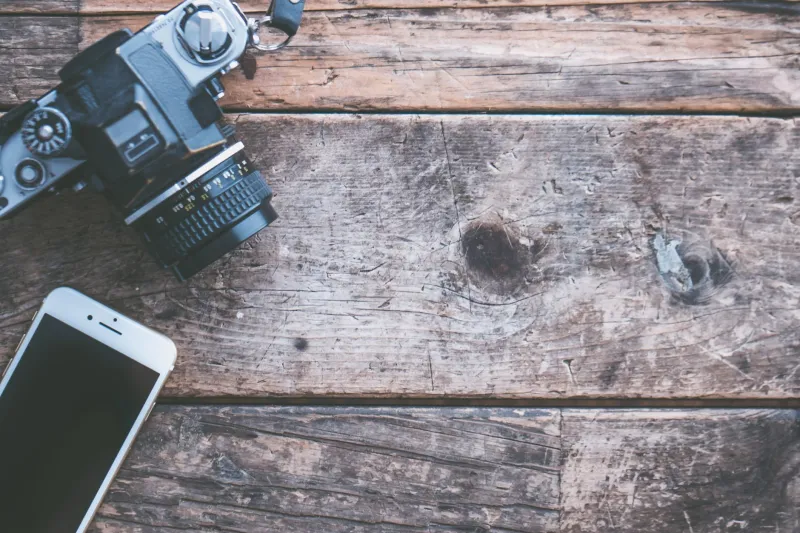
Remember when "good photos" meant owning a chunky DSLR with a bag full of lenses? That era isn't just fading — it's being actively demolished by a wave of AI-driven computational photography that's turning the tiny camera modules on your phone into something that would've seemed like science fiction a decade ago. We spent weeks putting flagship smartphones up against dedicated cameras, and honestly? The conversation is more complicated — and more exciting — than you'd expect.
What Even Is Computational Photography?
Here's the quick version: traditional cameras capture light through a physical lens onto a sensor and call it a day. The image you get is largely a product of the hardware — the glass quality, sensor size, aperture. Computational photography flips that script. Instead of relying on premium hardware to do all the heavy lifting, it uses software, machine learning models, and algorithms to construct an image from data that raw hardware alone could never produce.
Think about Night Mode on a modern iPhone or a Google Pixel. Your phone isn't just taking one photo in the dark — it's capturing a rapid burst of frames, analyzing motion, merging exposures, and using a neural network trained on millions of images to intelligently fill in detail that the sensor physically couldn't capture on its own. That's not photography in the traditional sense. That's AI building a photograph.
"We're not trying to simulate what a camera does," explained one imaging engineer at a major US smartphone manufacturer who asked to remain anonymous. "We're trying to produce the best possible representation of a scene for human perception. Sometimes that means diverging pretty significantly from what the raw sensor data looks like."
The Tech Stack Behind the Magic
So what's actually going on under the hood? A few key technologies are driving this shift:
Multi-frame processing is the backbone. Modern phones shoot anywhere from 9 to 30+ frames per shutter press, then merge them using alignment algorithms that can compensate for hand shake and subject movement. Google's HDR+ pipeline, which debuted years ago and has been continuously refined, is still one of the gold standards here.
Neural network-based super-resolution lets phones effectively "upscale" image detail beyond what the physical pixel count would suggest. Apple's Photonic Engine and Google's Real Tone technology both lean heavily on models trained to understand texture, depth, and human features at a granular level.
Semantic scene understanding is where things get genuinely wild. Your phone's camera now recognizes whether it's looking at a face, a pet, a plate of food, or a sunset — and applies completely different processing pipelines to each. Samsung's Expert RAW app, for instance, uses AI to identify scene types and adjust tone curves, sharpening, and noise reduction accordingly.
Depth mapping through multi-lens arrays rounds it out. The reason flagship phones now sport two, three, or even four cameras isn't just marketing — each lens feeds a slightly different perspective, and the AI triangulates depth information to enable realistic bokeh, better autofocus, and improved low-light compositing.
We Tested It — Here's What Happened
We put the Google Pixel 9 Pro, iPhone 16 Pro, and Samsung Galaxy S25 Ultra head-to-head against a Canon EOS R6 Mark II with a 50mm f/1.4 prime — a setup that retails for well over $3,000. Shooting conditions ranged from a bright outdoor market in downtown LA to a dimly lit jazz bar, plus controlled studio-style portrait work.
Daylight shooting? Honestly, a skilled observer would struggle to definitively pick the Canon in a blind test at social media or even standard print sizes. The phones were that good.
Low light was more nuanced. The Canon pulled ahead in preserving genuine shadow detail and avoiding the slightly "painted" look that AI noise reduction can introduce. But — and this is a big but — the Pixel 9 Pro's Night Sight produced usable, even beautiful shots in conditions where the Canon genuinely struggled without a tripod.
Portrait and professional work is still where dedicated cameras hold ground. If you're shooting for magazine covers or commercial campaigns where a client is going to scrutinize every pixel at 100%, the physics of a large sensor and quality glass still matter. But for editorial web content, social media, real estate, travel blogging, and even a growing number of indie film productions? The flagship phone is no longer a compromise — it's a legitimate choice.
The Uncanny Valley of "Too Perfect"
There's a real conversation happening in photography communities about whether computational photography has crossed into a kind of visual dishonesty. When your phone's AI decides to smooth skin, boost saturation, or synthesize detail that wasn't technically there, is that still photography?
"It's a philosophical question the industry is going to have to wrestle with," says one independent photographer based in Brooklyn who's been shooting professionally for 15 years. "I've started shooting with phones for some client work, but I'm always transparent about it. The images look great, but they're not entirely 'real' in the traditional sense."
Some photographers are actually leaning into this. The idea of the camera as a purely objective recording device was always a bit of a myth anyway — darkroom techniques, film choices, and lens characteristics all shaped the final image. AI is just a new, more powerful darkroom.
What's Coming Next
The trajectory here is steep. Qualcomm's latest Snapdragon chips include dedicated imaging NPUs (neural processing units) that can run complex AI models in real time, frame by frame. Apple's rumored next-generation imaging pipeline is said to incorporate even more aggressive semantic reconstruction. And startups like Luma AI are pushing the boundaries of what's possible by combining neural radiance fields with mobile capture — essentially letting you reconstruct full 3D scenes from a handful of phone shots.
Within three to five years, it's a reasonable bet that the primary differentiator between smartphone cameras won't be hardware specs at all — it'll be the quality and training data behind the AI models. The camera wars are becoming software wars.
The Bottom Line
If you're a hobbyist, a content creator, or even a working photographer shooting for digital-first clients, the case for carrying a dedicated camera is genuinely shrinking. The AI powering today's flagship phone cameras isn't just catching up to traditional hardware — in specific, real-world scenarios, it's surpassing it.
That doesn't mean DSLRs and mirrorless cameras are dead tomorrow. But it does mean the question is no longer "can a phone replace a camera?" It's "in which specific situations does dedicated hardware still justify the cost and inconvenience?" That's a very different — and far more interesting — conversation to be having.