Tiny Chips, Massive Gains: The Specialized Processor Uprising No One Saw Coming
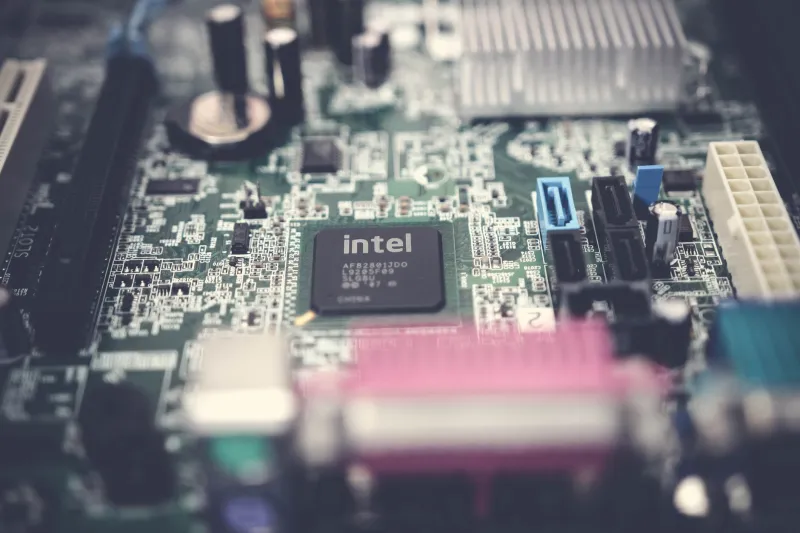
There's a certain kind of tech mythology that says bigger always wins. More transistors, more cores, more gigahertz — scale it up, ship it out, dominate the benchmark charts. For decades, that was basically the playbook. But something's been quietly breaking that logic apart at the seams, and it's happening inside devices you probably already own.
Specialized microprocessors — chips engineered from the ground up to handle one specific type of workload — are outrunning general-purpose silicon in ways that would've seemed absurd just five years ago. And the companies building them aren't always the names you'd expect.
The Problem With Trying to Do Everything
Here's the thing about general-purpose chips: they're impressive precisely because they're flexible. A modern x86 processor from Intel or AMD can run your spreadsheet, render a 3D game, stream video, and compile code — all at the same time. That versatility is genuinely remarkable.
But versatility has a cost. A chip designed to handle any possible workload has to carry a lot of architectural overhead. It's got to manage memory in ways that work for everything, handle instruction sets that stretch back decades, and burn power keeping subsystems active that might only get used occasionally. In computing terms, that's a lot of dead weight.
When you're building a chip that only needs to do one thing — say, run neural network inference at the edge, or process LiDAR data for a self-driving car — you can strip all that overhead away. You can optimize every gate, every memory pathway, every power rail specifically for that task. The result? A chip that's often faster, cooler, and more energy-efficient than a general-purpose processor that costs ten times as much.
The Edge AI Accelerator Boom
Nowhere is this more obvious right now than in edge AI. As more companies try to run machine learning models locally — without shipping data to the cloud — there's been an explosion of purpose-built AI accelerators designed specifically for on-device inference.
Companies like Hailo, Kneron, and Syntiant have been quietly building chips that can run computer vision and audio recognition tasks at a fraction of the power draw of a standard processor. Hailo's H15 chip, for example, can process AI tasks at over 40 TOPS (Tera Operations Per Second) while sipping just a few watts of power. Try getting that out of a general-purpose CPU.
Apple, to its credit, was early to this game. The Neural Engine baked into every A-series and M-series chip is essentially a specialized AI processor riding alongside the main CPU and GPU. It's a huge part of why iPhones handle on-device AI tasks — like Face ID, voice recognition, and computational photography — so smoothly. But even Apple's approach is increasingly being outpaced by pure-play companies building chips that do nothing but AI inference, all day, every day.
Custom Silicon for the Road Ahead
The automotive space might be where specialized chips are making their most dramatic statement. Building a self-driving or advanced driver-assist system on general-purpose hardware is, frankly, a nightmare. The latency requirements are brutal, the power constraints are tight, and the safety standards are unforgiving.
That's why companies like Tesla, Mobileye, and Qualcomm have all gone deep on custom silicon. Tesla's Full Self-Driving computer, built around its own in-house chip, processes sensor data with a level of efficiency that off-the-shelf hardware couldn't touch. Mobileye's EyeQ series has been purpose-built for ADAS (Advanced Driver Assistance Systems) for years, and the latest generation is a masterclass in doing more with less.
Even newer players like Hailo and Ambarella are carving out serious territory here, offering chipmakers and Tier 1 auto suppliers specialized silicon that handles vision processing and AI inference without requiring a server farm in the trunk.
The Underdog Chipmakers You Should Know
Beyond automotive and edge AI, there's a whole ecosystem of specialized chip startups doing genuinely wild things:
Groq is building chips specifically optimized for large language model inference — essentially, chips designed to run AI chatbots and text-generation models faster and cheaper than GPU clusters. Their architecture throws out the traditional memory hierarchy almost entirely, which sounds insane until you see the benchmark numbers.
Tenstorrent, co-founded by legendary chip architect Jim Keller, is taking a different angle — building AI chips that are highly programmable but still purpose-optimized, trying to thread the needle between flexibility and efficiency.
Mythic is going even further out, using analog compute to run AI inference — essentially doing math in the analog domain rather than digital, which can be dramatically more power-efficient for certain workloads.
None of these are household names yet. But they're the kinds of companies that tend to look obvious in hindsight.
Why Big Tech's Scaling Obsession Is a Vulnerability
Here's where things get a little uncomfortable for the Intels and NVIDIAs of the world. The dominant narrative in computing has been that scaling — packing more transistors onto a chip — is the path to progress. And NVIDIA has ridden that wave brilliantly with its GPU architecture for AI training.
But scaling is getting expensive. Pushing to 3nm and beyond costs billions in fab time, requires cutting-edge equipment that only a handful of companies can even access, and produces chips that consume enormous amounts of power. Data centers are already bumping up against real-world power and cooling constraints.
Specialized chips sidestep a lot of this. If you're not trying to be all things to all workloads, you don't necessarily need to be on the bleeding edge of the process node. A 7nm chip purpose-built for a specific task can outperform a 3nm general-purpose chip on that task while being dramatically cheaper to produce.
That's a competitive dynamic that doesn't favor the incumbents.
Doing More With Less Is the New Winning Move
There's something almost philosophically satisfying about where this is all heading. The tech industry spent decades chasing raw power — faster, bigger, more. And we got incredible things from that approach. But we also got chips that run hot, cost a fortune, and still struggle with workloads they weren't really designed for.
The specialized processor wave is essentially a correction. It's the industry admitting that knowing your problem deeply is more valuable than having a solution that kind of works for everything.
For early adopters and tech watchers, the takeaway is pretty clear: the next time you see a startup announcing a chip you've never heard of, targeting a use case that sounds niche — pay attention. The companies building the most interesting silicon right now aren't the ones trying to out-NVIDIA NVIDIA. They're the ones asking a simpler, smarter question: what exactly does this thing need to do, and how do we build the perfect tool for that job?
The chip giants aren't going anywhere. But the ground is shifting under their feet, one specialized processor at a time.