Beyond the Buzz: How Next-Gen Haptics Are Making Digital Touch Feel Shockingly Real
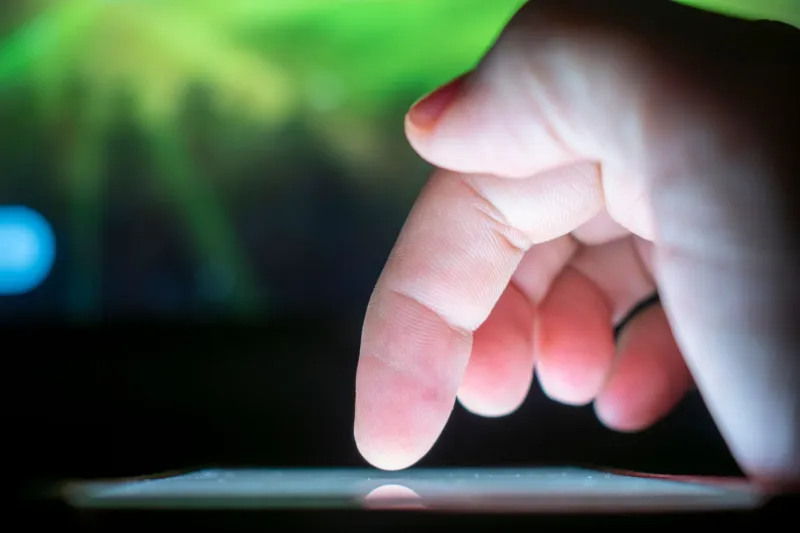
There's a moment every VR user knows. You reach out to grab a virtual object, your fingers close around nothing, and the whole illusion collapses. No matter how sharp the visuals or convincing the audio, the absence of physical sensation yanks you right back to reality. It's the uncanny valley — not for faces, but for touch.
That problem is older than the Oculus Rift, and for a long time, the best answer anyone had was a little eccentric cylinder motor buzzing somewhere near your palm. Helpful? Sure. Convincing? Not even close.
But something is shifting. A cluster of companies — some well-funded, some operating out of university spinoffs — are building haptic systems that don't just vibrate. They push, pull, texture, and resist. And if even half of what they're promising lands in consumer hardware over the next few years, the way Americans interact with screens, headsets, and wearables is going to feel fundamentally different.
The Problem with Your Current Vibration Motor
To understand why this matters, it helps to appreciate just how crude existing haptics actually are. The linear resonant actuators (LRAs) inside most flagship smartphones — including the ones Apple and Google have spent marketing dollars hyping — are genuinely better than the old-school spinning eccentric mass motors. They're faster, more precise, and can produce a wider range of pulse patterns.
But they're still just vibration. They move the entire device body in a single axis. Your nervous system, which evolved to detect sub-millimeter surface variations and pressure gradients across thousands of nerve endings, is not exactly fooled.
The result is a haptic experience that communicates "something happened" rather than "here's what it felt like." That gap — between notification and sensation — is exactly what the next generation of haptic engineers is trying to close.
Actuators You Can Barely See
One of the most promising directions involves piezoelectric actuators scaled down to sizes that would've seemed impossible a decade ago. Piezo materials deform when you run electricity through them, and they do it fast — fast enough to simulate the high-frequency vibrations your fingertips detect when you run them across a texture.
Companies like Immersion Corporation have been in this space for years, but newer players are pushing the physics further. Startups are developing arrays of micro-actuators that can be embedded directly beneath display glass, creating localized sensations at specific screen coordinates rather than buzzing the whole device. Tap a button on the left side of the screen, and only that region responds — with a crispness that starts to feel less like feedback and more like a physical object.
That localization is crucial. It's the difference between a doorbell and a handshake.
Electromagnetic and Ultrasonic Approaches
Piezo isn't the only game in town. Ultrasonic haptics — which use sound waves above human hearing range to create pressure sensations on the skin — have been quietly advancing for years. British firm Ultraleap (formerly Ultrahaptics) has demonstrated mid-air haptic feedback that lets users "feel" virtual objects without touching any surface at all. The technology has mostly lived in trade show demos and specialized industrial applications, but miniaturization is bringing it closer to wearable form factors.
Electromagnetic approaches are also gaining traction in the wearable space. Haptic gloves for VR and industrial training use arrays of small electromagnetic coils to apply variable resistance across the fingers, simulating the sensation of squeezing, gripping, or pressing against surfaces with different densities. HaptX, a Washington state-based startup, has built gloves capable of delivering 130 points of tactile feedback per hand — convincing enough that users instinctively adjust their grip when handling virtual objects of different weights.
The hardware is still bulky and expensive. But so was the first GPS unit you could buy for your car.
Why This Matters Beyond Gaming
It's tempting to frame next-gen haptics as a VR gaming story, and honestly, that's where the most dramatic demos live. But the implications stretch well beyond headsets.
Consider accessibility. For users with visual impairments, a phone screen that can convey texture, layout, and interactive elements through touch — not just audio cues — represents a meaningful leap in usability. Researchers at MIT and Stanford have published work on haptic displays for the visually impaired that translate visual information into tactile patterns, and as the underlying actuator tech gets cheaper and thinner, those systems could realistically live inside a standard smartphone.
Or think about telemedicine. Surgeons already perform remote procedures using robotic systems, but the lack of tactile feedback is a genuine clinical limitation — skilled surgeons rely heavily on the feel of tissue resistance to make real-time judgments. Haptic-enabled surgical interfaces that accurately relay force feedback across a network connection aren't science fiction. They're in clinical research right now.
Even something as mundane as online shopping changes when you can feel the simulated texture of a fabric swatch or the resistance of a keyboard's key travel before you buy.
The Thin Glass Problem
Of course, cramming sophisticated haptic systems into devices people actually want to carry around is a genuinely hard engineering problem. Smartphones are already a game of millimeter-level compromise between battery, camera optics, thermals, and structural integrity. Adding arrays of micro-actuators beneath the display without adding thickness, weight, or fragility is the kind of challenge that sends materials scientists to the whiteboard for months.
Some companies are betting on thin-film piezo materials that can be laminated directly to the back of display glass — essentially making the screen itself the haptic actuator. Early prototypes show promise, but durability under the stress of daily drops, temperature swings, and the general abuse Americans put their phones through remains an open question.
Apple, for its part, holds a substantial portfolio of haptic-related patents suggesting the company has been thinking seriously about this for years. Whether that translates into something shipping in a near-future iPhone or stays buried in Cupertino's research labs is anyone's guess.
The Sensation Gap Is Closing
Here's the honest state of play: we're not at the point where any consumer device makes digital touch feel indistinguishable from physical reality. The uncanny valley of touch is real, and we're still somewhere in the middle of it.
But the trajectory is unmistakable. The actuators are getting smaller. The latency is dropping. The spatial resolution — how precisely a system can target a sensation to a specific point on your skin — is improving rapidly. And the software layer that translates digital events into nuanced haptic patterns is maturing alongside the hardware.
The devices you'll be holding and wearing five years from now will almost certainly feel different in a literal sense. Not just smarter or faster, but physically more convincing — more present in a way that's hard to articulate until you've felt a well-executed haptic system make your brain do a double-take.
That moment of "wait, was that real?" is exactly what the haptic revolution is chasing. And it's getting closer than most people realize.